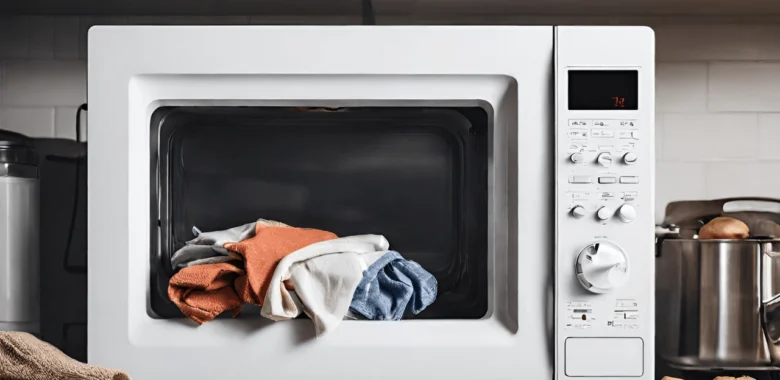

Someone told you that putting clothes in the microwave is a quick way to dry them. Or you stumbled across the idea online. Or you were desperate after a spill and the microwave was right there. However you arrived at this question, the answer matters — because microwaving the wrong items causes fires, damages the appliance permanently, and in some cases injures the person standing in front of it.
This guide covers what actually happens when you microwave fabric or other non-food items, why certain materials are genuinely dangerous, the complete list of what should never go in a microwave, the fastest safe alternatives for drying clothes quickly, and what every homeowner should know about microwave safety in general. If you use a microwave every day — which most people do — this information directly affects your household safety.
The Direct Answer
Do not put clothes or any fabric in the microwave to dry them. As fabric dries inside a microwave, it begins absorbing microwave energy directly rather than water, and its temperature rises rapidly. Natural fibers can ignite. Synthetic fibers melt and release toxic fumes. Metal fasteners like zippers and underwires arc and create sparks. The risk of fire is real and happens faster than most people expect.
Quick Reference: What Can and Cannot Go in a Microwave
| Item | Safe? | Why |
|---|---|---|
| Clothing / fabric | Never | Ignites, melts, or arcs when dry |
| Metal (foil, cutlery, pans) | Never | Reflects microwaves, causes arcing and sparks |
| Styrofoam containers | Never | Melts, releases styrene into food |
| Eggs in shell | Never | Steam pressure builds — eggs explode |
| Sealed containers / pouches | Never | Steam pressure causes explosion |
| Non-microwave-safe plastic | Never | Warps, releases BPA and phthalates into food |
| Nothing (empty microwave) | Never | Destroys the magnetron — expensive to replace |
| Microwave-safe glass and ceramic | Safe | Designed for microwave use |
| Paper towels and parchment paper | Safe | Safe as covers — do not microwave without food present |
Can You Dry Clothes in the Microwave?
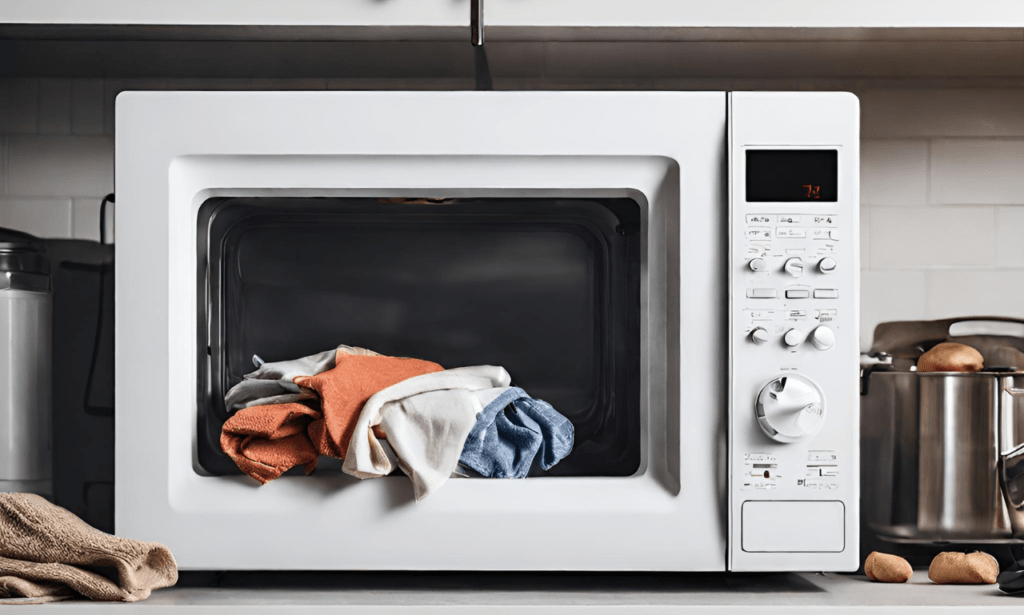
No. This is one of the most dangerous things a person can do with a microwave, and it is more common than most people realize. The microwave heats food by generating electromagnetic radiation at 2.45 GHz — a frequency that causes water molecules to vibrate rapidly, generating heat through friction. When wet clothing goes into a microwave, it works initially: the water in the fabric absorbs the energy, gets hot, and begins evaporating as steam.
The dangerous phase begins as the water content drops. Once the fabric starts drying out, there is less water to absorb the microwave energy. The energy has to go somewhere. The fabric itself begins absorbing it, and the temperature of the fabric rises rapidly and unevenly. Natural fibers like cotton and linen can reach ignition temperature within minutes on a standard microwave power setting. You do not have to run the cycle for long before you have a fire risk inside the appliance.
Synthetic fibers — polyester, nylon, acrylic — do not ignite as easily as cotton but they melt. Melting synthetics release volatile organic compounds and potentially toxic fumes. The melted plastic also bonds to the microwave interior and is extremely difficult to remove. Blended fabrics that combine natural and synthetic fibers are the most unpredictable: parts of the garment may melt while other parts ignite, with no way to predict which will happen first.
Metal fasteners make the situation significantly more dangerous. Virtually every item of clothing has some metal component — zippers, snaps, underwire in bras, metal rivets on jeans, metal aglets on shoelaces. Metal reflects microwave energy and creates arcing — visible electrical sparks — almost immediately. These sparks are hot enough to ignite fabric and can pit and crack the interior enamel of the microwave cavity.
What Actually Happens When You Microwave Fabric: A Timeline
| Time | What Happens | Risk Level | What You Might Notice |
|---|---|---|---|
| 0-30 seconds | Water molecules in fabric heat and steam releases | Low | Steam, warmth, fabric looks damp |
| 30 sec – 2 min | Water diminishing — fabric begins absorbing energy directly | Moderate | Smell of hot fabric, uneven heating visible |
| 2-4 minutes | Fabric temp rises sharply — cotton scorches, synthetics melt | High | Burning smell, smoke, discoloration |
| 4+ minutes | Fire risk severe — any metal detail arcs and sparks immediately | Critical | Sparks, flames, microwave damage |
The Complete List: What Should Never Go in a Microwave
Clothes are far from the only dangerous item people put in microwaves. Each of the following items causes its own specific type of damage — to the food, to the appliance, or to the person using it.
Metal in Any Form
Metal reflects microwave energy rather than absorbing it. When microwave radiation bounces off metal surfaces inside the cavity, it creates electrical arcing — visible sparks that jump between metal surfaces and the cavity walls. These sparks reach temperatures high enough to ignite paper, plastic, and fabric, and the repeated electrical discharge damages the magnetron tube, which is the core component of the appliance and the most expensive part to replace.
Metal in a microwave includes: aluminum foil, stainless steel cutlery and bowls, cast iron pans, takeout containers with metallic surfaces, mugs or plates with gold or silver trim, and any twist ties or metal bag clips. It also includes clothing with metal fasteners, which is what makes microwaving clothes for drying so immediately dangerous.

Styrofoam (Polystyrene)
Standard polystyrene foam containers — the white takeout boxes that come with restaurant orders — are not microwave-safe. When heated, polystyrene softens and warps, and releases styrene into the food. The National Toxicology Program lists styrene as reasonably anticipated to be a human carcinogen based on animal studies and occupational exposure data.
Some restaurants do use microwave-safe foam containers specifically labeled as such, but these are the exception rather than the rule. If the container does not have an explicit microwave-safe label, do not microwave it. Transfer the food to a microwave-safe glass or ceramic dish instead.
Non-Microwave-Safe Plastics
Many plastics are not designed for microwave use. When heated, they can warp, melt, and leach chemicals including bisphenol A (BPA) and phthalates into food and drink. Both of these compounds are endocrine disruptors — they interfere with hormone function in the body.
Plastics that are frequently used in microwaves but should not be: single-use takeout containers (even when labeled #1, #3, #6, or #7), yogurt tubs, margarine containers, single-use water bottles, and most deli containers. The only plastics safe to microwave are those explicitly labeled microwave-safe, which typically carry the #5 recycling code (polypropylene) and a microwave-safe symbol.
Eggs in Their Shell
A whole egg in its shell should never go in a microwave. The yolk and white heat faster than the shell can release steam. Pressure builds inside the egg until it is released explosively — either while still in the microwave or when you handle it after removing it. An intact-looking microwaved egg can detonate in your hand. Always crack eggs before microwaving and beat them or pierce the yolk to prevent the same pressure issue from building inside the yolk membrane.
Sealed Containers and Airtight Pouches
Any container that traps steam without a vent will build pressure until something gives way. This applies to vacuum-sealed meal pouches, containers with tightly sealed lids, condiment packets, and even some baby food pouches. The container either deforms, fails at the seal, or explodes — all of which can cause burns and create a significant mess that also poses a burn risk when the scalding contents spray.
Always pierce sealed pouches before microwaving, remove or loosen lids, and leave a vent when covering food with plastic wrap. This is a non-negotiable safety step, not a suggestion.
Running the Microwave Empty
An empty microwave is one of the most damaging conditions for the appliance. With no food or liquid to absorb microwave energy, the magnetron — the tube that generates the microwave field — reflects energy back into itself. This causes the magnetron to overheat rapidly. The damage accumulates with each incident and can permanently fail the tube, which is the most expensive component in the appliance and in many cases costs more to replace than buying a new microwave.
If you accidentally start the microwave empty, stop it immediately. A few seconds of running empty will not cause catastrophic damage, but longer periods accelerate wear significantly. Keep a microwave-safe mug of water inside the cavity when the microwave is not in use if you have young children who might start it empty.
Grapes
Whole grapes or grapes cut nearly in half (but still connected by a thin skin bridge) generate plasma — ionized, electrically conductive gas — when microwaved. This produces sparks, a small fireball, and the potential for microwave damage. This is a documented physical phenomenon, studied in peer-reviewed papers, and not just an internet myth. Grapes heated in a microwave can produce plasma fireballs that persist for several seconds and are hot enough to cause burns and minor appliance damage.
Hot Peppers
Heating hot peppers, dried chilis, or anything containing capsaicin in a microwave volatilizes the capsaicin molecules into the air inside the appliance. When you open the door, those molecules hit your face and eyes. The effect is similar to pepper spray — painful eye and throat irritation that can take thirty minutes or more to fully clear. If you need to heat hot peppers, do it on a stovetop with ventilation, not in a microwave.

Safe Ways to Dry Clothes Quickly Without a Microwave
If you need to dry a garment fast and do not want to run a full dryer cycle, these methods are safe, effective, and will not start a fire.
Fast Clothing Drying Methods: Ranked by Speed
- 1
Tumble dryer on high heat — 15-30 minutes for most items. The fastest option by far for any dryer-safe garment. Check the care label first — delicates, wool, and elastane-containing stretch fabrics need low heat or air only.
- 2
Hair dryer on medium heat — 5-15 minutes for a single garment or a specific damp area. Keep the dryer moving continuously to avoid concentrating heat in one spot, which can scorch some fabrics. Effective for a shirt collar, a small section of jeans, or a wet patch.
- 3
Extra spin cycle in the washing machine — 2-5 minutes. If the item just got wet, an additional spin removes the bulk of the water mechanically. A garment that comes out of an extra spin cycle is dramatically closer to dry than one that simply dripped after washing, cutting the remaining drying time by half or more for any method you use next.
- 4
Roll in a dry towel — 2-3 minutes. Lay the garment flat on a dry towel. Roll both together tightly, then wring the roll. Unroll, repeat with a dry section of towel. This transfers a surprising amount of moisture to the towel through absorption and pressure. Combine with hanging near a heat vent for fast results.
- 5
Hang near a heating vent or radiator — 30-60 minutes depending on the garment. Draping clothes over or near a heat source moves warm, dry air through the fabric consistently. More effective than room-temperature air drying, gentler than the dryer, and requires zero effort beyond hanging the item up.
- 6
Iron while damp — 5-10 minutes for items that can be ironed. A damp garment placed on an ironing board with a hot iron produces significant steam as it dries, leaving the garment pressed and dry simultaneously. Works well for cotton shirts, dress pants, and linen. Not suitable for knits, synthetics, or stretch fabrics.

What You Can Safely Put in a Microwave
Microwave-safe glass
Pyrex, tempered glass bowls and plates labeled microwave-safe
Ceramic dishes (without metallic glaze)
Check for microwave-safe label — avoid gold or silver trim
Paper towels
Safe as a food cover or liner — do not use with no food present
Parchment paper and wax paper
Safe as a cover over food — do not allow to touch heating elements
Polypropylene plastic (#5)
Only if explicitly labeled microwave-safe on the container
Damp cloths for compress use
Briefly, in 30-second intervals only — fabric must be genuinely wet
Microwave Safety: What Every Homeowner Should Know
Beyond what goes inside the microwave, there are several safety practices that apply to the appliance itself. Most microwave accidents are preventable with basic awareness of how the appliance works and what its limits are.
Inspect the Door Seal Regularly
The door of a microwave contains a multi-layer seal that prevents microwave radiation from leaking out of the cavity during operation. This seal includes a physical gasket and an electromagnetic choke structure built into the door frame. If the seal is visibly cracked, the door is bent or warped, or the door no longer closes flush with the frame, the microwave should be taken out of service immediately and replaced or professionally serviced. Microwave radiation leakage from a damaged door is a genuine health hazard.
Clean Food Residue Promptly
Dried food residue inside the microwave cavity absorbs microwave energy during subsequent uses. This creates localized hot spots that can scorch and eventually ignite over time. Wipe spills immediately after they happen. For accumulated residue, place a microwave-safe bowl containing one cup of water with several tablespoons of white vinegar or the juice of one lemon in the cavity. Microwave on high for three to five minutes, then leave the door closed for five minutes. The steam loosens baked-on residue that wipes away easily with a damp cloth.
Ensure Adequate Ventilation
Microwaves generate heat in their electronic components and require airflow through their external vents to dissipate that heat. The vents are typically on the top, back, or sides of the unit. Blocking these vents by pushing the microwave against a wall, placing items on top of it, or installing it in a tight enclosure without clearance causes the electronics to overheat, shortening the life of the appliance and creating a fire risk. Follow the manufacturer’s recommended clearance distances — typically at least two inches on the sides and several inches at the rear.
A microwave that regularly runs hot to the touch on its external surfaces, or that has its vents blocked, is worth addressing immediately. Overheated electronics in enclosed spaces are a genuine fire risk and represent the same category of home safety concern as maintaining working smoke detectors. If your detector has been blinking in ways you do not recognize, our guide on what your smoke detector signals mean explains every indicator pattern in plain language.
Do Not Operate With the Door Open or a Damaged Latch
Microwaves have interlock switches that stop the magnetron when the door is opened. If the door latch is broken or the switches are faulty, the microwave may continue operating with the door open, which exposes the user to microwave radiation. This is not a theoretical concern — faulty door interlocks are the most common safety defect found in microwave repair. If the door latch feels loose, does not click firmly, or the microwave seems to operate with the door slightly ajar, stop using it immediately.
Superheated Liquids
Plain water and smooth liquids heated in a microwave can reach temperatures above boiling point without actually boiling — a phenomenon called superheating. The liquid has no nucleation sites (rough surfaces or impurities that allow bubbles to form) so it stays liquid even above 100°C. When you disturb the liquid by picking up the cup, adding a spoon, or moving it, it can instantly and violently boil — erupting out of the container and causing severe burns.
To prevent superheating: do not heat water in a microwave for longer than two minutes in a standard-sized mug. Place a wooden stirring stick or a non-metallic object in the cup while heating to provide a nucleation point. Let the cup sit undisturbed for thirty seconds after removing it from the microwave before adding anything to it or picking it up quickly.
Frequently Asked Questions
Can you dry clothes in a microwave?
No. Fabric ignites when it dries out inside a microwave because the electromagnetic energy has nowhere to go except into the fabric itself. Synthetic fibers melt and release toxic fumes. Metal fasteners arc and spark. Use a tumble dryer, hair dryer, or hang near a heat source instead — all of which are faster, safer, and more effective.
Can you microwave socks or underwear?
No. The same fire and melting risks apply to all clothing regardless of size. Socks and underwear are frequently made from synthetic or synthetic-blend fabrics, which melt at microwave temperatures. Even 100% cotton socks can scorch or ignite. Use a dryer or hair dryer for small items.
What happens if you accidentally microwave metal?
Sparks (arcing) appear inside the microwave. Stop the appliance immediately if you see sparking — do not wait to see if it resolves on its own. Remove the metal item carefully after the microwave has stopped and fully cooled. Inspect the interior enamel for scorch marks or pitting. If you see interior damage, have the microwave inspected by a technician before further use, as pitting can absorb energy and overheat in subsequent uses.
Is it safe to microwave a damp towel?
Briefly, and with specific conditions. A genuinely wet towel can be microwaved in 30-second intervals to create a hot, moist compress — a technique used for muscle pain and facial steaming. The towel must be genuinely wet (not just damp), and the process must be watched continuously. Remove the towel carefully as it will be very hot and can cause burns. Never microwave a dry or nearly dry towel, and never leave one in the microwave unattended. This applies only to towels with no metal components — no metal loops or tags.
Why does food pop or explode in the microwave?
Moisture inside food converts to steam during heating. If the steam cannot escape quickly enough — because the food has a skin, membrane, or shell that contains it — pressure builds until the containment fails. This is why whole eggs, whole grapes, sealed sausages, and foods with tight skins need to be pierced before microwaving. A quick fork prick in several places allows steam to escape continuously rather than building to a pressure point.
How do you remove the burnt smell from a microwave?
Fill a microwave-safe bowl with one cup of water and add either several tablespoons of white vinegar or the juice of one lemon. Microwave on high for four to five minutes, then leave the door closed for an additional five minutes to allow the steam to saturate the interior. Wipe the inside thoroughly with a damp cloth — the steam loosens residue and the vinegar or lemon neutralizes odor-causing compounds. Repeat as needed for persistent smells. An open box of baking soda left inside the cavity overnight absorbs residual odor between uses.
What plastic is safe to microwave?
Only plastic containers explicitly labeled microwave-safe. These are typically made from polypropylene (recycling code #5). The label is usually a small icon showing a microwave with wavy lines. Single-use takeout containers, yogurt tubs, deli containers, and most food-storage bags are not microwave-safe regardless of how many times you have used them in the past without visible damage. The chemical leaching that occurs does not produce visible signs — it happens at a molecular level that cannot be detected without testing.
Microwave safety is one of those home topics where a few well-understood rules prevent the vast majority of accidents. The appliance is useful and generally safe when used correctly — understanding its limits is what makes it stay that way. For more home safety guides covering the hazards and situations that homeowners encounter every day, browse our Home Safety section — including our guides on flammability risks in the home and which common household items are fire hazards.
Related Reading